
आत्मनिर्भर, शिक्षित, सशक्त जनजाति।
Inspired by the concept of establishing self-reliant tribal villages, the “Village Development” initiative was launched. Its primary objective is to transition from traditional skills toward economic growth; consequently, efforts to mobilize villages—aimed at achieving economic, educational, social, and cultural development—are currently underway in numerous communities.
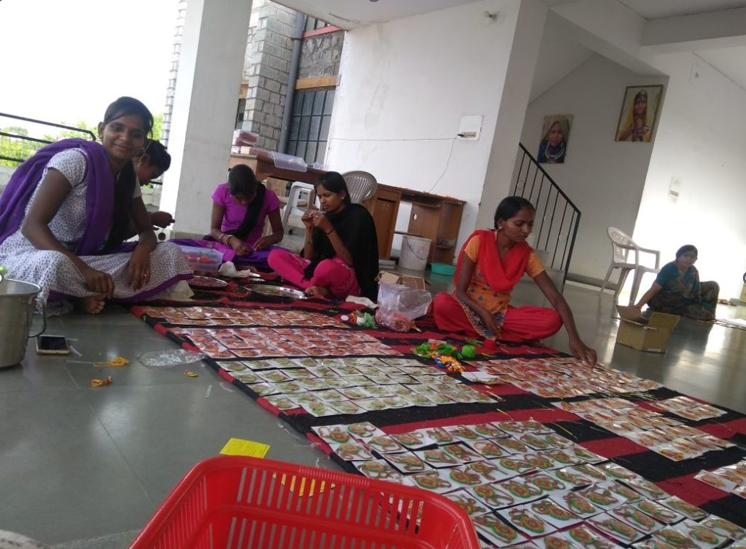
Expansion of Self-Help Group initiatives.
Promoting self-employment through the provision of skill development training.
Promoting the production of organic fertilizers, organic farming, and coarse cereals.
Integrating mushroom cultivation into cottage industries, alongside focused initiatives in poultry farming, cattle rearing, and pisciculture.
Specialized initiatives in water management.
To enhance forest produce and engage in its processing, packaging, and marketing.
A focus on the nation, indigenous products, and the environment.
Expansion of operations with special consideration for border and sensitive regions.
To extend activities to tribal communities where no work is currently being undertaken, and to accord priority to Particularly Vulnerable Tribal Groups (PVTGs).
To conduct region-specific training programs aimed at developing a cadre of dedicated workers to accomplish all these tasks.
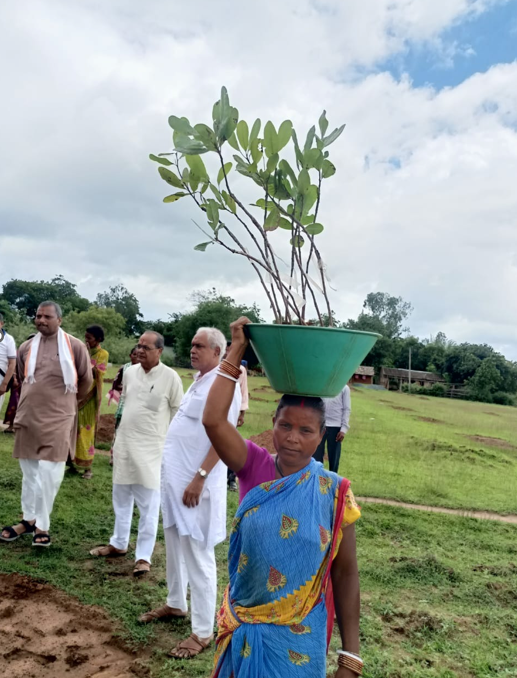
Under the Wadi Project, 12,980 trees were planted in Radhapur and other villages within the Keonjhar district of Odisha, accompanied by proper water management systems. Furthermore, by boosting farmers’ incomes through intercropping, the initiative successfully curbed rural migration and contributed to environmental improvement.